Adding a bathroom to your newly finished lower level elevates the space from a simple storage room to an independent, highly functional living area. Whether you are building a private guest suite, a home gym, or a sprawling entertainment room in Mount Laurel or Berlin, forcing family and guests to travel upstairs to use the restroom is a major inconvenience. However, installing a bathroom below ground level involves overcoming unique mechanical challenges. Because basements sit below the municipal sewer line, standard gravity-based plumbing systems cannot be used without specialized interventions.
The Challenge of Below-Grade Plumbing
In a typical first- or second-floor bathroom, wastewater flows downward through the pipes, utilizing gravity to reach the main sewer line exiting the house. In a basement, the fixtures are physically lower than the exit pipe. Water cannot flow uphill naturally.
Sewage Ejector Pumps
The most robust and common solution for full basement bathrooms is the installation of a sewage ejector pump system. This involves breaking a small section of the concrete basement floor to install a sealed holding tank (a sump basin designed specifically for waste).
All the wastewater from the basement toilet, sink, and shower drains via gravity into this tank. Once the waste reaches a specific level inside the tank, a heavy-duty mechanical pump activates, grinding the waste and forcefully propelling it upward through a vertical PVC discharge pipe until it connects safely with the main gravity sewer line on the floor above.
According to the International Association of Plumbing and Mechanical Officials (IAPMO), proper venting of sewage ejector systems is strictly regulated by the Uniform Plumbing Code to prevent hazardous sewer gases from escaping into the living space. These systems must be engineered and installed by licensed professionals to ensure absolute safety and reliability.
Upflush Macerating Toilets
If cutting into the concrete floor is structurally impossible or prohibitively expensive, an upflush (macerating) toilet system is a highly effective alternative. These systems place a sealed mechanical macerator box directly behind the toilet bowl on top of the finished floor. When flushed, the waste enters the box, is mechanically ground into a fine slurry, and pumped vertically through small-diameter pipes to the main sewer line. Many modern upflush systems also feature secondary inlets to accommodate wastewater from a vanity sink and a shower, allowing for a full bathroom installation without any concrete excavation.
Design Considerations for Subterranean Bathrooms
Once the mechanical plumbing challenges are resolved, the aesthetic design of a basement bathroom must address the lack of natural light and low ceiling heights typical of older homes.
Optimizing Light and Space
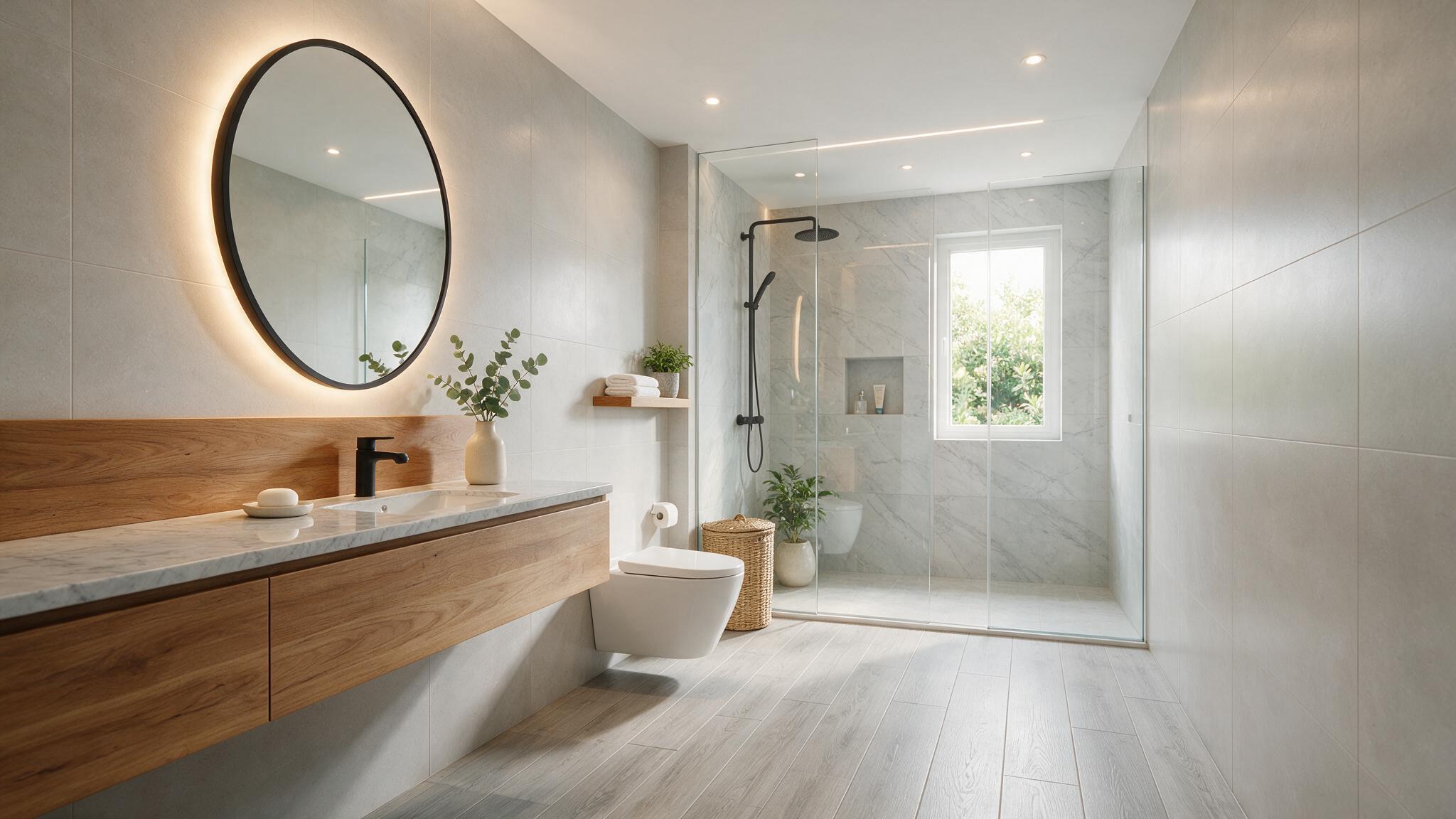
To prevent the bathroom from feeling like a dark cave, utilize brilliant, high-lumen LED recessed lighting. Choose glossy, light-colored large-format porcelain tiles for the shower walls to reflect light across the room. A frameless glass shower enclosure is critical in a basement setting; a shower curtain visually chops the small room in half, whereas clear glass allows the eye to travel all the way to the back wall, maximizing the perceived square footage.
Ventilation and Moisture Control
Basements are naturally humid. Adding the steam from a hot shower exacerbates this issue, increasing the risk of mold. A high-capacity, ultra-quiet exhaust fan must be installed and properly vented directly to the exterior of the house—never into the floor joists or a drop ceiling cavity.
Trust the Below-Grade Experts
Building a bathroom below the sewer line requires exact mechanical engineering and specialized plumbing equipment. Do not trust a standard handyman to safely manage raw sewage systems inside your home. To ensure your new space is safe, sanitary, and beautiful, contact our experts to design a custom basement bathroom in Voorhees. Subterra Basement Remodelers specializes in complex below-grade plumbing and luxurious finish designs for Mount Laurel properties.
FAQs:
- Do basement bathrooms smell bad? Not if they are installed correctly. A properly sealed sewage ejector pump and a correctly sized exhaust fan ensure that a basement bathroom smells just as clean as any upper-level bathroom.
- Can I put a bathroom anywhere in my basement? Technically yes, but placing it as close as possible to the existing main plumbing stack and exterior walls reduces the distance the waste must be pumped and limits the amount of pipe that needs to be run through the ceiling joists.
- What happens to a sewage ejector pump if the power goes out? Like a standard sump pump, an ejector pump requires electricity. If the power fails, the pump will not operate, meaning the basement toilet and shower cannot be used until power is restored (unless hooked up to a whole-house generator).