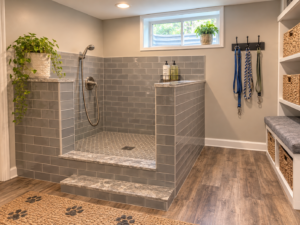
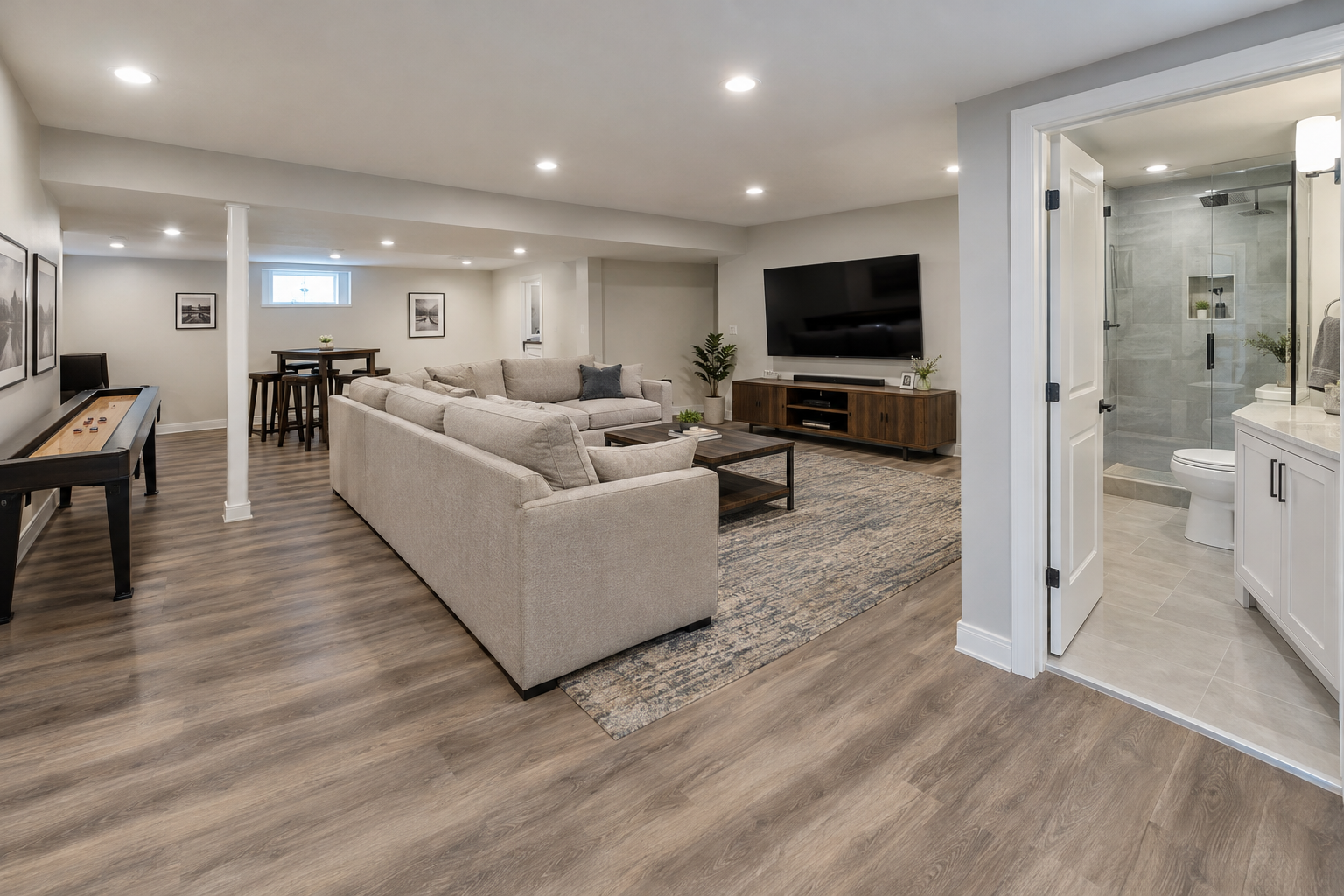
A full bathroom can turn a basement into a guest suite, a teen hangout or a home gym. However, in many Cherry Hill, Voorhees and Marlton homes, the main sewer line leaves the house above the basement floor. In that case, a sewage ejector pump is what makes a basement bathroom possible.
One of our Cherry Hill clients wanted a full bath in a large unfinished basement. The plan required an underground basin, a pump and a new drain connection. Today the space works like a small apartment for visiting family.
This guide explains how a sewage ejector pump system works, what it needs to be safe and quiet, and how to plan it before framing starts.
When a Basement Bathroom Needs a Sewage Ejector Pump
Gravity drainage only works when fixtures sit higher than the sewer line. Therefore, the first question is where your main drain exits the foundation.
- Sewer line below the slab. Fixtures can often drain by gravity after the slab is cut and trenched.
- Sewer line above the floor. Toilets, showers and sinks must drain into a sealed basin first.
- Partial options. Some homes need a pump only for the shower and sink, while a special up-flush toilet handles the rest.
Plumbing codes such as the International Residential Code sanitary drainage chapter set rules for sump and ejector basins, including sealed lids, venting and check valves.
Key Parts of a Safe Sewage Ejector Pump System
A reliable system has several parts that work together. Leaving one out is a common cause of odors and backups.
- Sealed basin. A gas-tight lid keeps sewer odors out of the finished basement.
- Correctly sized pump. The pump must handle solids and the lift height to the main line.
- Check valve. It stops water in the discharge pipe from flowing back into the basin.
- Shutoff valve. It allows the pump to be serviced without draining the entire line.
- Dedicated vent. The basin vents to the house vent system or outdoors.
- Dedicated electrical circuit. A properly protected outlet keeps the pump running reliably.
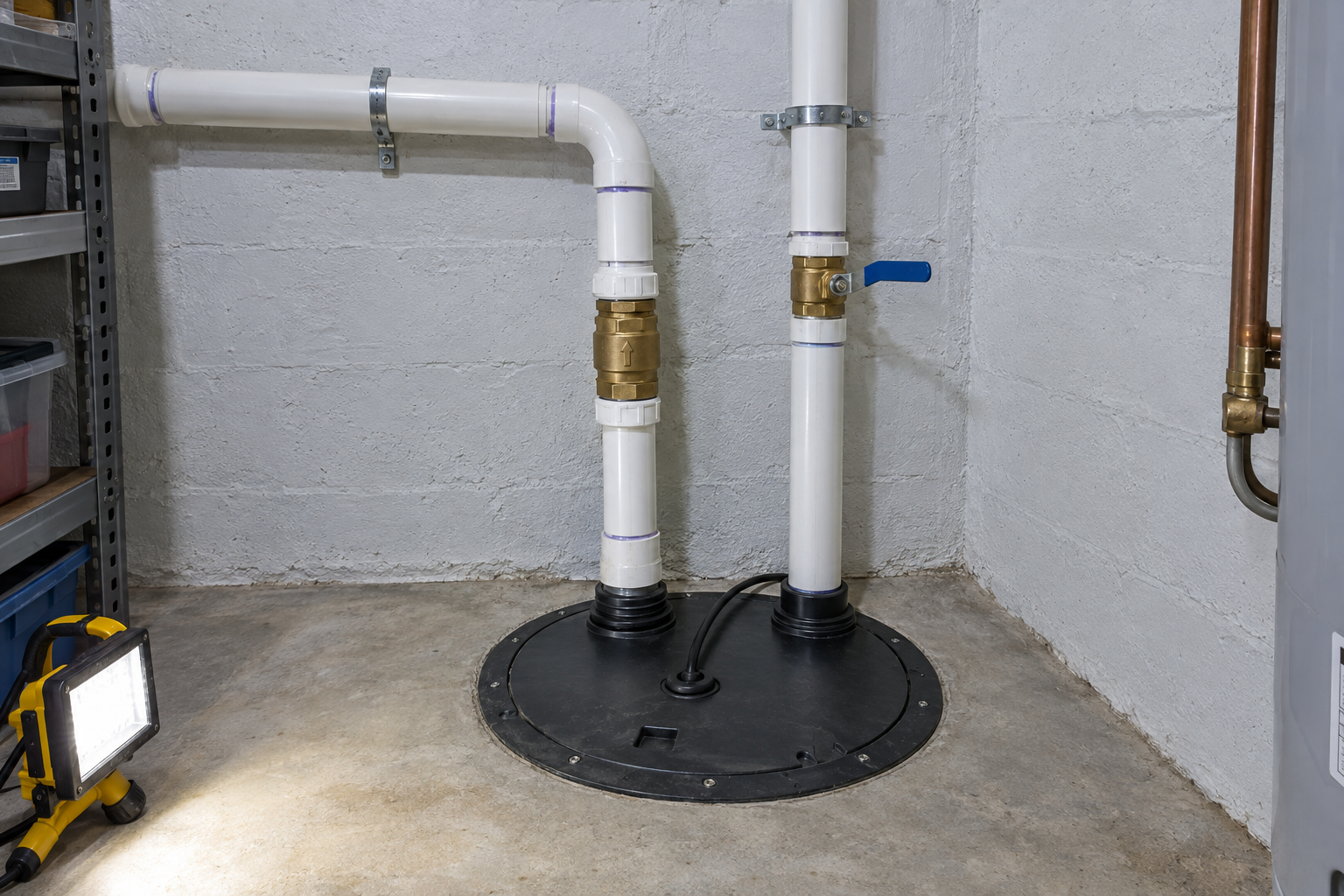
We also plan access. The basin usually sits in a utility closet with a removable panel so it can be inspected and serviced later.
Planning the Bathroom Layout Around the Ejector Basin
Location affects cost, noise and comfort. For example, placing the basin close to the bathroom keeps underground trenching short.
- Keep the basin near the toilet and shower to shorten drain runs.
- Place it in a closet or mechanical zone, not under living space flooring.
- Insulate the closet walls to reduce pump noise.
- Route the discharge pipe the shortest way to the main stack.
- Leave space for a future pump replacement.
Targeted Upgrade vs. Full Basement Bathroom Build
A targeted upgrade makes sense when:
- An existing basin is in good shape but lacks a sealed lid or check valve.
- You are only adding a laundry sink or wet bar.
- The current bathroom works but has odor issues.
A full build makes sense when:
- You are finishing the basement and want a full bath with a shower.
- No drain rough-in exists below the slab.
- Waterproofing and moisture issues need to be solved at the same time.
Warning Signs of an Ejector Pump Problem
- Sewer odor near the basin or floor drain.
- The pump runs constantly or cycles too often.
- Gurgling sounds from the basement toilet or shower.
- Water around the basin lid.
If you notice any of these signs, schedule an inspection before finishing more space around the system.
Frequently Asked Questions
Is a sewage ejector pump noisy? A modern pump in a sealed basin is usually quiet. You may hear a brief hum when it runs. Insulating the closet reduces sound further.
How long does a sewage ejector pump last? With normal use, many pumps last several years. Avoid flushing wipes or grease to extend pump life.
Do I need a permit for a basement bathroom in New Jersey? Yes. New plumbing fixtures and a pump basin require permits and inspections. We manage that process for you.
Can the bathroom be added to an existing finished basement? Yes, but it often means cutting the slab and opening some walls. Planning it during the main finishing project is more efficient.
Plan Your Basement Bathroom in South Jersey
A sewage ejector pump opens up new options for your basement, from a guest suite to a full bath beside a home theater. Subterra handles framing, plumbing, electrical and finishes in-house. Learn more about our basement remodeling services, explore our bathroom remodeling work, or contact our team to schedule an estimate.