

An egress window makes a finished basement safer and brighter. However, the window well outside can become a small pool after a heavy storm. Good window well drainage is what keeps that water outside and away from your new basement.
In Cherry Hill, Voorhees and Marlton, many homes sit on clay soils that drain slowly. When a window well is dug without a drainage plan, water collects against the glass and finds its way into the wall.
This guide explains how a properly drained window well is built and what to check if yours already holds water.
Why Window Wells Collect Water
A window well is an open pit next to the foundation. Rain, roof runoff and groundwater all head toward it.
- Poor grading. Soil slopes toward the house instead of away.
- Downspouts nearby. Roof water dumps right next to the well.
- No drain. The well bottom has no path for water to leave.
- Clay soil. Water sits instead of soaking into the ground.
How Proper Window Well Drainage Is Built
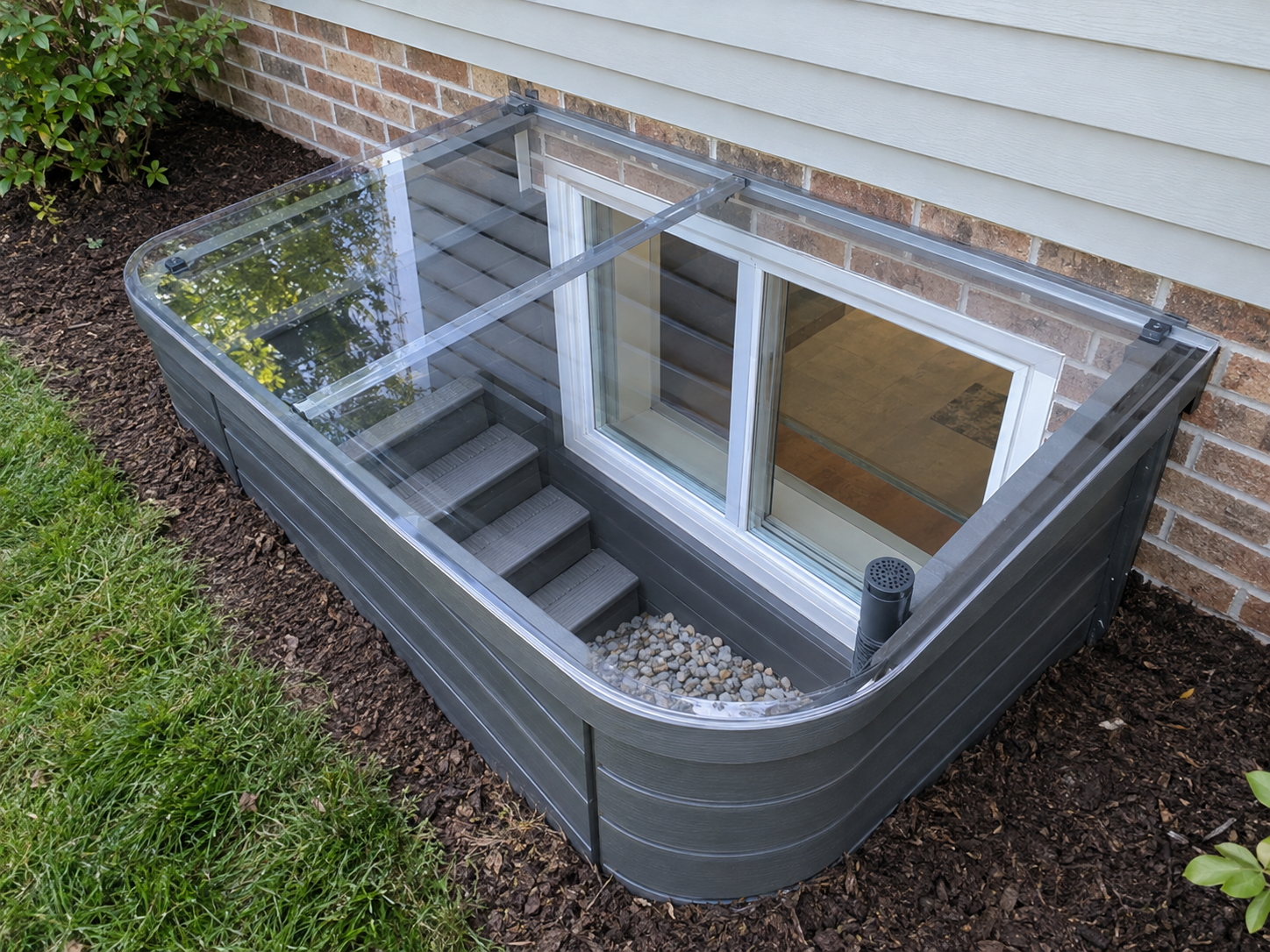
Drainage starts below the window, not at the surface. Each layer helps water move down and away.
- Excavation several inches below the window sill.
- A layer of washed gravel at the base of the well.
- A vertical drain pipe connected to the footing drain or a sump system.
- A well liner anchored tightly to the foundation.
- Sealed joints where the well meets the wall.
Building codes such as the International Residential Code set requirements for emergency escape openings and window wells, including size and drainage.
Covers, Grading and Downspouts
Surface water control matters as much as the drain. Therefore, the area around the well should be planned too.
- A clear, egress-rated cover that opens from inside.
- Soil graded to slope away from the foundation.
- Downspouts extended away from the well.
- Gutters cleaned so they do not overflow near windows.
Fix the Existing Well or Rebuild It?
A repair may be enough when:
- The well liner is solid.
- Only the gravel is clogged with soil.
- Grading or a downspout is the main cause.
A rebuild makes sense when:
- There is no drain at all.
- The liner is rusted or pulling away.
- Water has already leaked into the finished basement.
Warning Signs of Poor Window Well Drainage
- Standing water in the well after rain.
- Water stains below the window inside.
- Mold or musty smell near the window.
- Leaves and soil filling the bottom of the well.
Address these issues before finishing walls around the window. Repairs are easier while the basement is still open.
Frequently Asked Questions
Do all egress window wells need a drain? In most cases, yes. A drain or connection to the footing system is the most reliable way to keep water out.
Will a cover stop all the water? A cover helps with rain and debris, but it does not replace a drain.
Can you fix a well without replacing the window? Often, yes. We can dig out the well, add a drain and new gravel.
How long does it take? A window well drainage repair usually takes a day or two.
Keep Your South Jersey Basement Dry
Good window well drainage protects your basement finishes and your egress window. Subterra Basement Remodelers handles egress windows, waterproofing and full basement finishing. Explore our basement remodeling services, read more on our basement blog, or contact our team for an estimate.