A basement can be the best square footage in your home—if the environment is controlled first. Otherwise, even a pretty finish can develop musty odors, bubbling paint, or warped trim. So, for basement finishing Voorhees NJ, the right approach starts with moisture strategy before framing.
Step 1: Identify how moisture enters (and how air behaves)
Basements deal with ground humidity, seasonal dampness, and temperature swings. Therefore, we evaluate:
- Exterior drainage and downspout discharge
- Foundation conditions and seepage patterns
- Humidity levels and airflow
- Dehumidification planning
Step 2: Build assemblies designed for basements
Basement walls and floors need the right materials. For example:
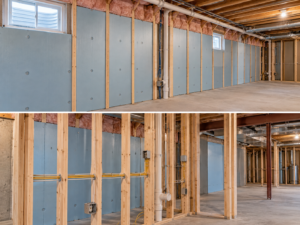
- Insulation strategies that prevent condensation
- Moisture-aware framing and drywall systems
- Flooring selections that tolerate basement conditions
As a result, the space stays comfortable and durable.
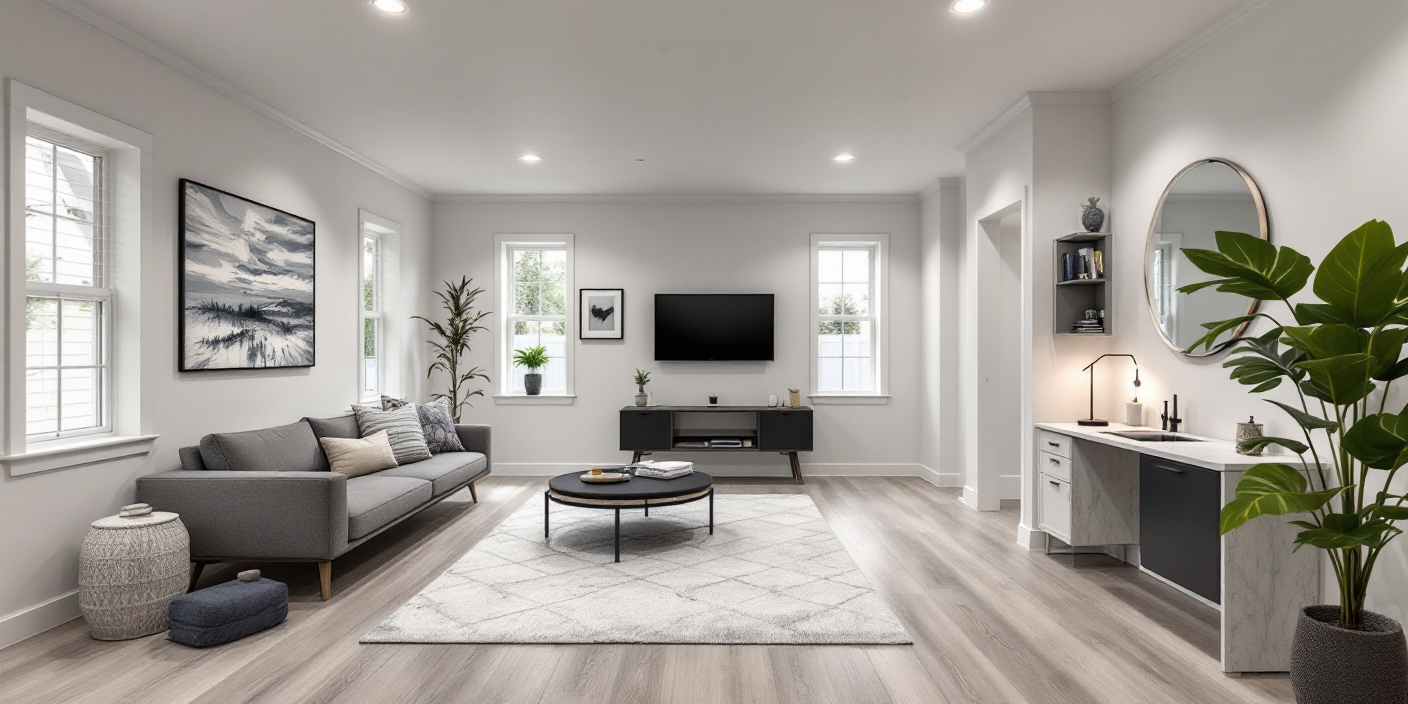
Step 3: Layout that doesn’t feel “lower level”
A basement should feel like real living space. So we design:
- Lighting layers to eliminate dark corners
- Ceiling strategies that keep access where needed
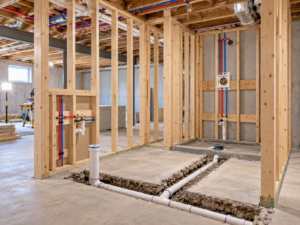
- Storage and utility zones that look intentional
FAQs
Do I need an egress window? Sometimes—especially for bedrooms.
Can you finish basements year-round? Yes, with correct moisture planning.
What causes musty smells? Humidity + poor airflow + wrong materials.