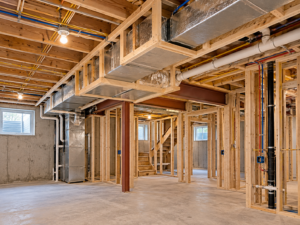

An unfinished basement represents massive untapped potential, but it is also the part of your home most vulnerable to weather conditions. Heavy rainstorms saturate the soil surrounding your foundation, creating immense pressure (known as hydrostatic pressure) that forces water directly through porous concrete or masonry joints. Committing to a comprehensive plan for basement finishing Voorhees families count on requires addresses these water pressures proactively. Installing an interior French drain system establishes a bulletproof water-diversion network beneath your floor, ensuring your lower level stays dry.
The Engineering Behind Interior Perforated Drainage
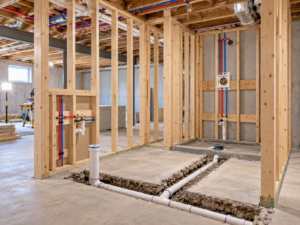
An interior French drain is a highly structured water management system built below the slab line. To install it, a specialized finished basement contractor carefully trenches the concrete perimeter next to the foundation walls. We lay down perforated drainage pipes surrounded by clean, aggregate stone and route them directly to a high-capacity sump pit. Any groundwater attempting to seep into your basement is intercepted by the aggregate stone, safely dropped into the perforated lines, and pumped completely away from your property before it can damage your drywall, baseboards, or flooring.
Why Structural Concrete Modifications Require Permitting
Trenching an entire concrete slab to install a below-grade drainage system alters the baseline slab integrity of your home’s lowest level. To ensure public safety and preserve your real estate asset’s value, all major subterranean alterations must follow strict safety standards. Homeowners planning structural repairs, renovations, or major remodeling work can review Philadelphia’s building and repair permit guidance through the City of Philadelphia to see the rigid regional benchmarks required for legal, safe foundation and utility water routing.
Comprehensive Subterranean Drainage Solutions
We prioritize engineering a bone-dry substrate before installing premium finishes:
- Concrete perimeter trenching, gravel packing, and perforated pipe routing.
- Heavy-duty interior weep-hole drilling for hollow concrete block foundations.
- High-volume submersible sump pump integration with check valves.
- Application of thick, industrial-grade vapor barriers along bare concrete walls.
South Jersey Communities We Secure Daily
We deliver robust moisture-remediation and subterranean finishing to homes across:
- Voorhees
- Marlton
- Berlin NJ
Frequently Asked Questions
What is the difference between an exterior and interior French drain?
An exterior French drain requires digging up the yard surrounding your house to access the foundation walls from the outside. An interior system is installed directly underneath your basement floor slab, making it significantly more affordable, faster to build, and entirely insulated from outdoor roots.
Will an interior French drain ruin the structural integrity of my foundation?
Not when executed by specialized professionals. We trench the concrete in short, controlled sections immediately adjacent to the footer, ensuring the structural integrity of the load-bearing foundation walls is never compromised or undermined.
How do I know if my basement needs a French drain before finishing?
If your basement regularly experiences dark water stains along the floor seams, efflorescence (white powdery crystals) on the concrete walls, or standing water during heavy downpours, a French drain is a mandatory prerequisite before hanging drywall.