A basement remodel is one of the most practical ways to add usable space—if moisture and layout are handled first. In Voorhees, Marlton, and Berlin NJ, many basements are structurally sound but underused because lighting is poor, mechanicals are awkwardly placed, or moisture risk hasn’t been addressed. In 2026, the best finished basements feel like “real rooms,” not bonus storage.
Step 1: Confirm dryness before finishes
Finishing over moisture is the fastest way to ruin new drywall and flooring. Smart basement projects start with:
- Drainage and sump assessment (if applicable)
- Vapor control strategy
- Wall and floor prep designed for basement conditions
Step 2: Layout that works around mechanicals
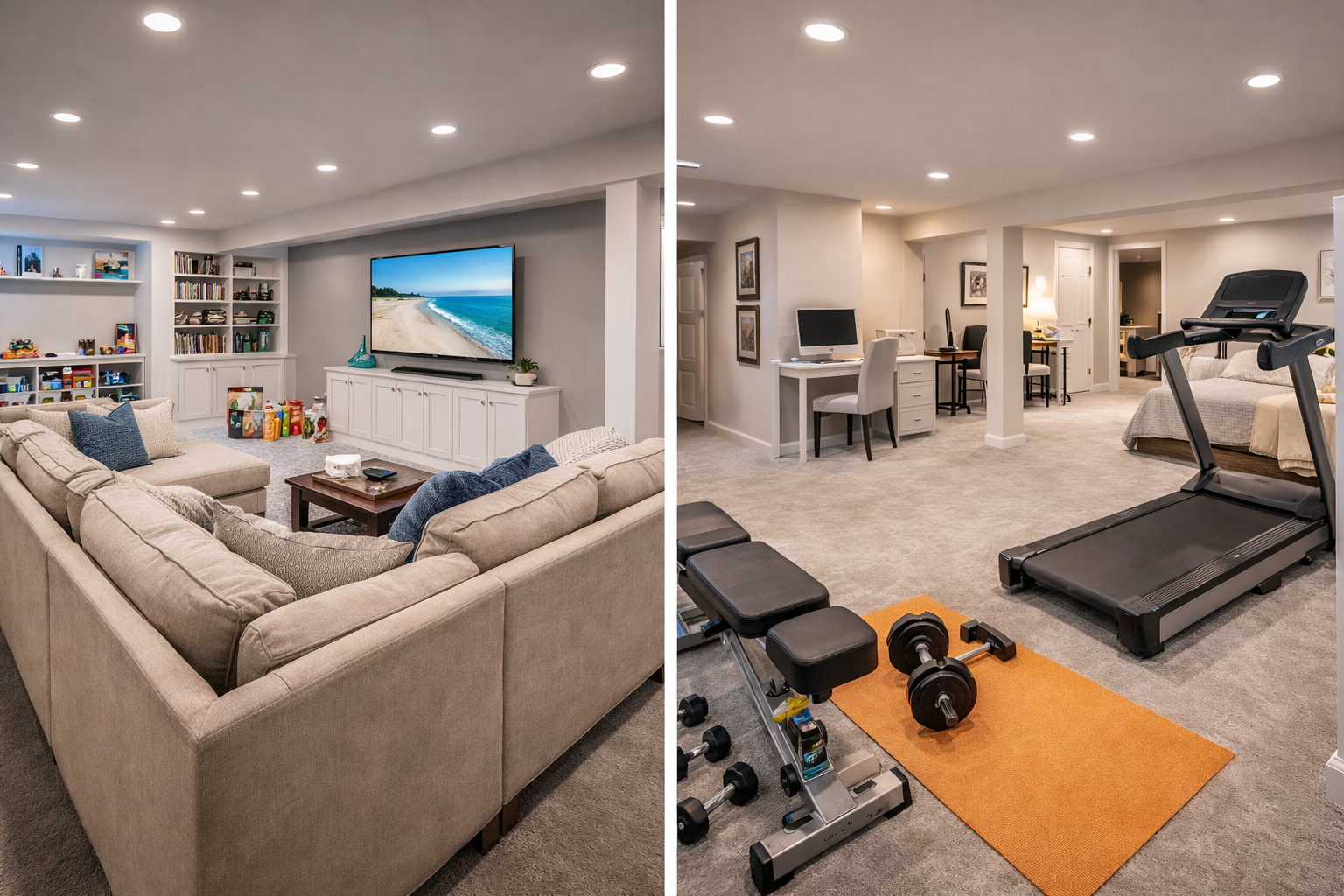
Basements often require planning around beams, ductwork, and utilities. The goal is to build zones: storage, living area, office/gym, and clean access to mechanicals.
Step 3: Lighting + electrical that changes everything
Basements become inviting when you add layered lighting, more outlets, and thoughtful switch placement. This is one of the highest-impact upgrades.
Quick FAQs
Do I need an egress window? It depends on how the space is used and local code requirements for sleeping areas.
What flooring is best for basements? Durable options that handle moisture risk better than traditional materials.
Can basements feel bright? Yes—lighting plan + lighter finishes + clean layout.