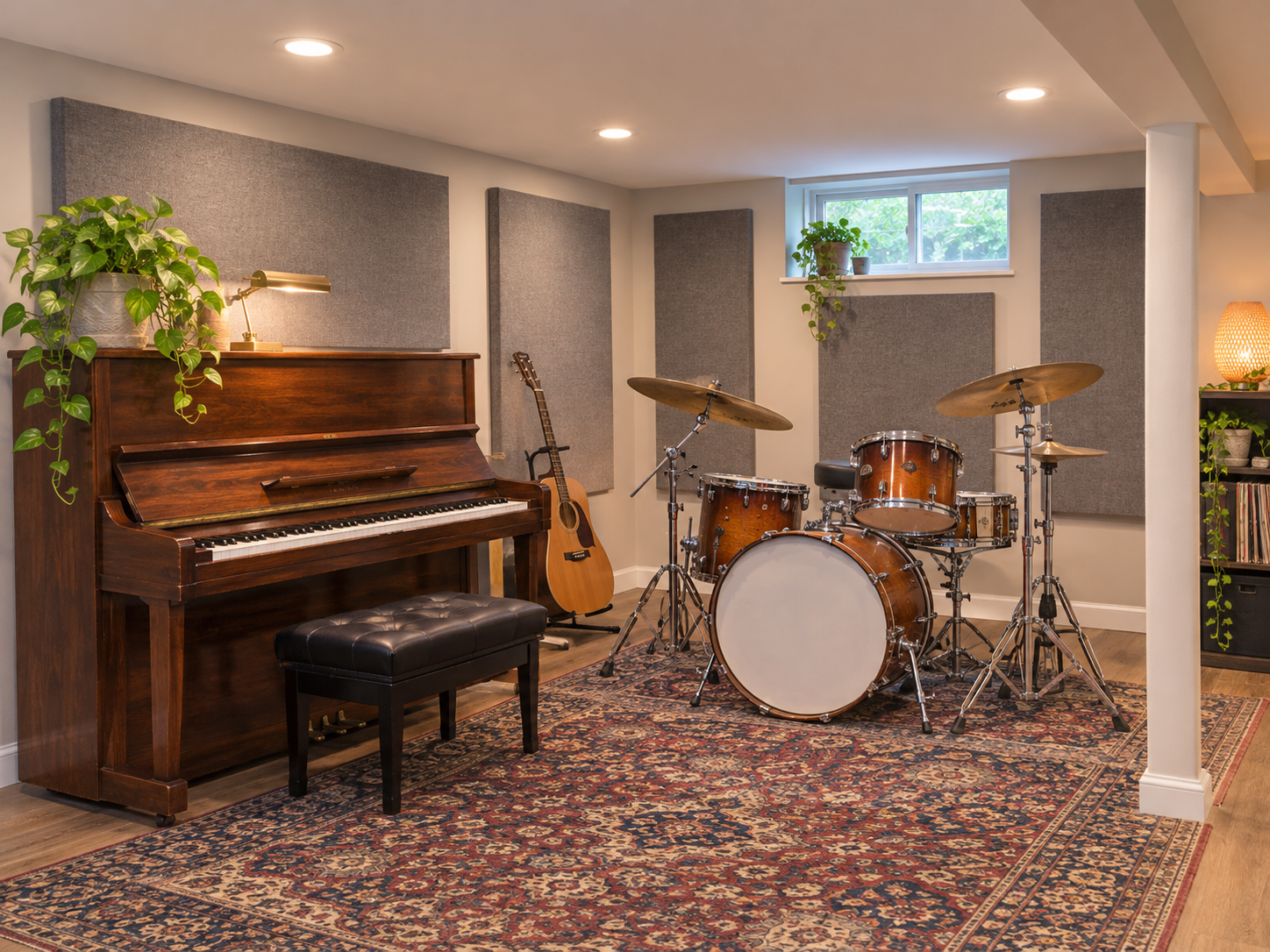
A basement music room gives drummers, guitar players and piano students a space of their own. Families in Voorhees, Cherry Hill and Marlton use it to keep practice from filling the whole house.
Good sound control starts in the framing. So we plan walls, ceiling and doors before drywall goes up.
Why Basements Work Well for Music
Concrete walls and soil already block a lot of sound. Still, the ceiling is the weak point. The International Code Council sets sound ratings for shared walls that make a useful target.
- Ceiling sound leaks. Joists carry sound straight to the floor above.
- Open ductwork. Supply ducts act like speaking tubes.
- Humidity swings. Damp air damages wood instruments.
What We Plan for a Basement Music Room
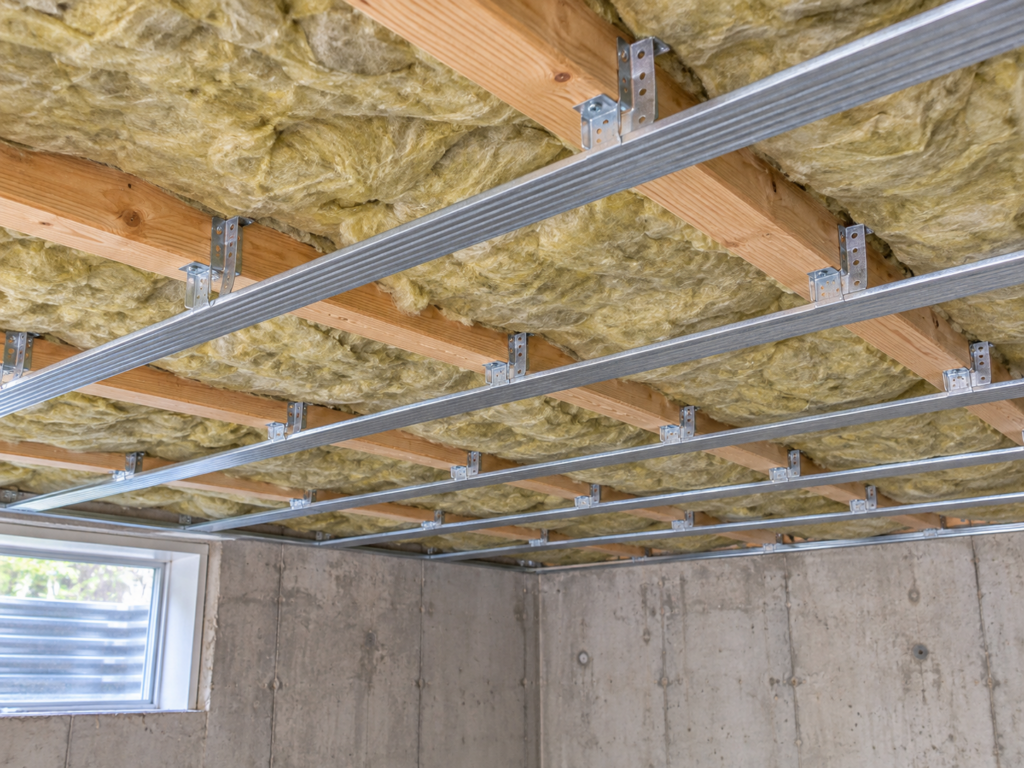
We photograph each layer before it is covered. As a result, you can see the insulation and clips behind the walls.
- Mineral wool in walls and joist bays.
- Resilient clips with double drywall on the ceiling.
- A solid-core door with full seals.
- Dedicated circuits for amps and recording gear.
- A dehumidifier that holds 40 to 50 percent humidity.
Light Upgrade or Full Studio Build?
A targeted upgrade makes sense when the basement is finished and you only need panels and a better door. Instead, a full build makes sense when the ceiling is open and you want real sound isolation.
Signs Your Basement Needs Work Before a Music Room
- Musty smells or damp spots on the slab.
- Water stains along the foundation wall.
- Low ceilings near ducts and beams.
Frequently Asked Questions
Will a music room be fully soundproof? No room is perfect, but drums can be cut to a soft thump upstairs.
Do I need acoustic panels too? Yes. Panels shape sound inside the room.
Can a music room double as an office? Yes. Quiet walls help video calls too.
Start Planning Your Basement Music Room
Explore our basement remodeling services, read more on our basement blog, or contact our team.