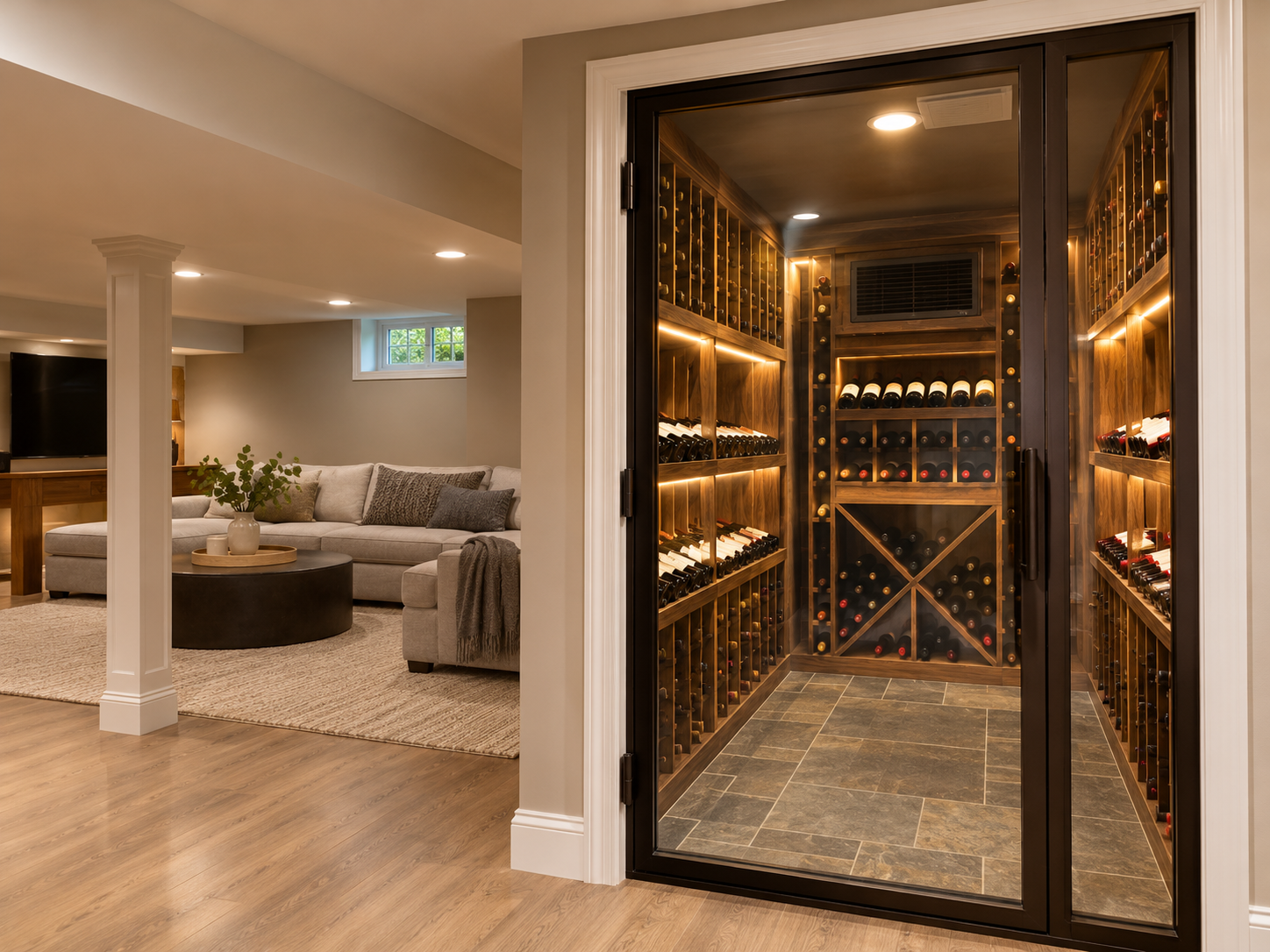
For many homeowners in Voorhees, Cherry Hill, Marlton, Moorestown and Haddonfield, the basement is the natural place for a wine collection. It is below ground, usually cooler than the rest of the house, and darker. It seems like a ready-made cellar.
But a basement is not automatically a good place for wine. Temperatures can swing between seasons, humidity can climb in summer, and an unplanned wine room can end up with moldy walls, damp labels or a cooling unit that runs nonstop. A well-designed wine room solves these problems by treating the room as its own controlled space inside the finished basement.
This guide explains how to plan a basement wine room, from moisture control and insulation to cooling, lighting and storage.
Is a Basement a Good Place for Wine?
A basement can be a great location because it starts out cooler and more stable than upstairs rooms. But in South Jersey, basements often face:
- Seasonal temperature swings, especially near furnaces, water heaters or exterior walls.
- High summer humidity that can lead to mold.
- Moisture coming through foundation walls and floors.
- Limited air circulation in closed rooms.
A dedicated wine room handles these issues with insulation, air sealing, moisture control and, often, a cooling unit.
Start With Moisture Control
Before building any finished room in a basement, the basement itself should be dry. The U.S. Department of Energy’s Building America article on basement insulation systems warns that basements can easily develop mold, rot and odor problems if not designed properly. It explains that moisture can come from both inside and outside the house: interior air carries vapor that will condense on basement walls and floors if those surfaces are below the dew point, and rainwater or groundwater can wick through foundation walls if moisture barriers are missing.
That means checking for leaks, grading and downspout problems, and wall or floor moisture before planning a wine room. If there is active water, it needs to be fixed first.
Insulation and Vapor Control: Getting the Assembly Right
A wine room is meant to stay cooler than the rest of the basement, so it needs insulation and good air sealing. The tricky part is how that insulation meets the foundation wall.
DOE’s article explains that when cellulose or fiberglass insulation is installed in contact with basement walls, it can absorb large amounts of moisture and stay chronically damp, and that the problem is compounded when an impermeable vapor barrier such as plastic is used on the interior because it will trap moisture in the wall. It also says not to install polyethylene sheeting, vinyl or foil wallpaper, or epoxy, oil or alkyd paint on the interior of basement walls, because these are Class I vapor retarders that trap moisture.
For foundation walls, DOE describes rigid foam panels that adhere completely to the wall, with no air gaps, and edges and seams tightly sealed, and it describes closed-cell spray foam as providing the best moisture control of all interior foundation insulations. It also notes that spray foam must be covered with ignition-barrier paint or ½-inch gypsum board.
For a wine room, this means:
- Foundation walls should be insulated with an approach suited to basements, not batts pressed against concrete.
- Interior partition walls and the ceiling that separate the wine room from the warmer basement also need insulation and air sealing.
- The vapor control strategy should be designed by your contractor for the full assembly, since the wine room is cooler than the surrounding space.
- The door should be an exterior-grade or insulated door with weatherstripping.
Cooling and Humidity
Many basement wine rooms need a dedicated cooling unit to hold a steady temperature year-round. Options include:
- Through-the-wall units that exhaust heat into an adjacent room.
- Ducted systems that place the unit outside the room.
- Split systems with a separate condenser.
The right choice depends on room size, where heat can be exhausted, noise preferences and budget. Wine cooling units differ from standard air conditioners, and the manufacturer’s installation requirements should guide the design. A dedicated electrical circuit is often needed.
Humidity matters, too. Too dry can affect corks, while too humid can lead to mold and damaged labels. A cooling unit and good insulation help keep conditions steady.
Flooring, Lighting and Storage
- Flooring. DOE notes that if the basement slab is uninsulated, carpet or vinyl flooring should not be installed because they trap moisture. Tile, stone or sealed concrete are common in wine rooms.
- Lighting. Use low-heat LED lighting and keep fixtures away from bottles. Motion sensors or timers help keep lights off when the room is empty.
- Racking. Wood or metal racks can be built in or freestanding. Leave space between racks and walls for airflow.
- Glass walls or doors. Glass can show off the collection, but it affects insulation and may need special glazing.
Locating the Wine Room in the Basement
- Avoid placing it next to the furnace, water heater or laundry, which add heat and humidity.
- An interior corner, away from sunny window wells, is often easier to keep cool.
- Plan where the cooling unit will exhaust heat before choosing the location.
- Consider how it connects to a bar or entertaining area if you have one.
Common Mistakes in Basement Wine Rooms
Wine rooms built without a plan often run into the same problems:
- Using a standard window air conditioner instead of a cooling unit designed for wine rooms.
- Wrapping the foundation walls in plastic and then insulating with batts, which can trap moisture.
- Skipping the door seal, which lets warm, humid air in.
- No plan for where the cooling unit’s heat goes, which can overheat an adjacent closet or room.
- Placing the room next to the furnace or water heater.
- Using carpet on an uninsulated slab.
- Leaving lights on, which adds heat.
Each of these is avoidable when the wine room is designed as part of the basement plan.
Making It Part of a Bigger Basement Remodel
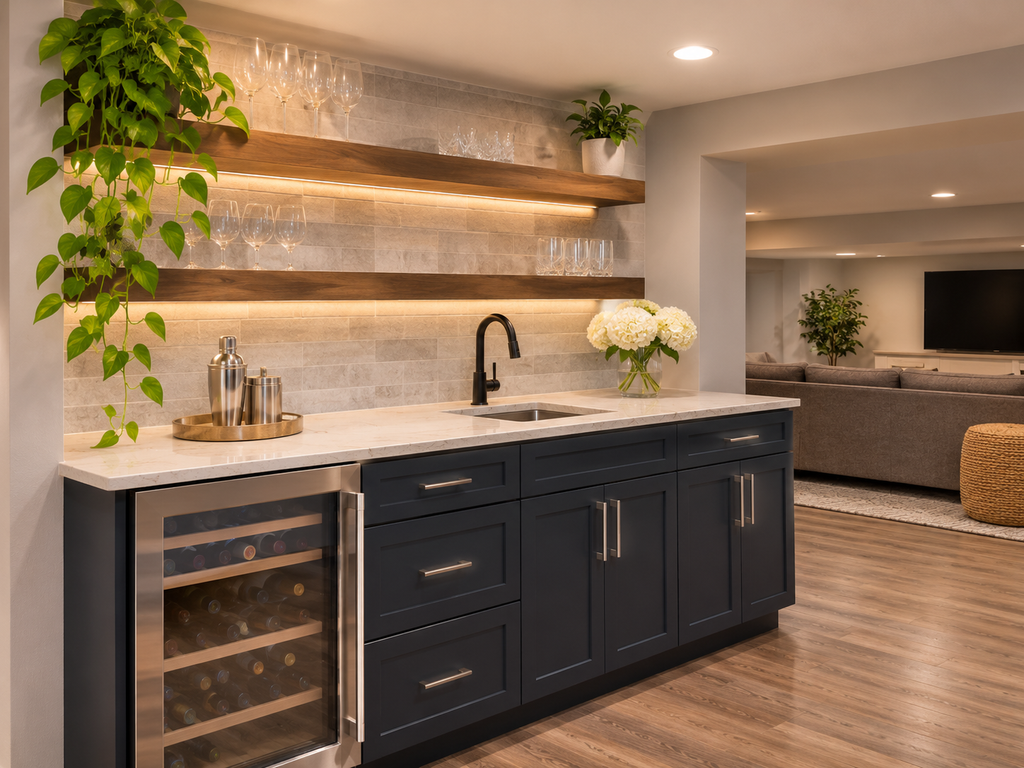
A wine room often works best as part of a larger finished basement. Many South Jersey homeowners pair a wine room with a wet bar, a lounge or a game room, creating a space for entertaining. Planning them together lets your contractor coordinate:
- Plumbing for the bar and any water needs for the cooling system.
- Electrical circuits for the cooling unit, bar appliances and lighting.
- Insulation and moisture control for the whole basement.
- Lighting design, so the wine room glows without adding heat.
- Flooring that suits both the wine room and the surrounding space.
Questions to Ask Your Contractor
- Is my basement dry enough for a wine room?
- How will the walls, ceiling and floor of the wine room be insulated and air sealed?
- What cooling system fits the room and where will it exhaust heat?
- Does the room need a dedicated electrical circuit?
- What door and glass options work for a wine room?
Frequently Asked Questions
Is a basement good for storing wine? It can be, because it starts cooler and darker. A dedicated, insulated and dry room makes it work.
Do I need a cooling unit for a basement wine cellar? Many basement wine rooms need one to keep a steady temperature year-round, especially in summer.
How do I keep a basement wine room from getting moldy? Start with a dry basement, use insulation suited to foundation walls, seal air leaks, and control humidity. Avoid moisture-trapping materials on foundation walls.
Can I add a wine room to an existing finished basement? Often, yes, but the walls, ceiling, door and cooling need to be designed for the room.
A Wine Room Built for Your Basement
A great wine room is about more than racks. Subterra Basement Remodeling Voorhees LLC plans the moisture control, insulation, cooling and finishes so your basement wine room protects your collection. Learn more about our basement remodeling services in South Jersey and schedule a consultation.