
Expanding your home’s livable square footage is the most effective way to accommodate a growing family without the massive expense of relocating. For property owners in Cherry Hill, Haddonfield, and Voorhees, the basement represents hundreds of square feet of untapped potential. Transforming a cold, concrete storage area into a luxurious home theater, guest suite, or playroom requires a significant investment. Understanding the factors that drive construction costs and the subsequent return on investment (ROI) helps you plan a renovation that aligns perfectly with your financial goals.
Primary Cost Drivers for Lower Level Renovations
Unlike a standard first-floor room addition, a basement is built below grade. This unique environment dictates specialized construction methods and materials, which heavily influence the overall budget.
Moisture Mitigation and Subfloor Preparation
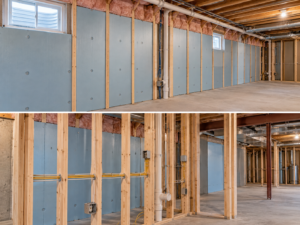
As discussed in structural planning, a basement must be entirely waterproofed before cosmetic finishes are applied. If your home requires the installation of a perimeter drain, a sump pump, or extensive wall sealing, this will add several thousand dollars to the initial prep phase.
Furthermore, finishing a basement floor correctly requires a thermal break. Installing luxury flooring directly onto a cold concrete slab leads to condensation and a freezing floor in the winter. Contractors typically install a dimpled plastic underlayment or a specialized floating subfloor system to separate the finish flooring from the concrete. This essential step increases material and labor costs but is mandatory for long-term comfort.
Egress Requirements and Permits
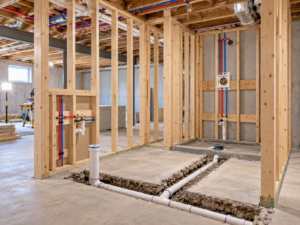
If your basement design includes a designated bedroom, municipal building codes require the installation of an egress window to provide a safe emergency exit. Excavating the exterior earth, cutting through the concrete foundation, and installing a specialized egress window well is a highly labor-intensive process that must be factored into the budget early. Additionally, routing new electrical circuits, HVAC ductwork, and plumbing for a basement bathroom requires specialized tradesmen and strict municipal permitting.
Analyzing the Return on Investment
While finishing a basement requires a robust budget, it consistently offers one of the strongest returns on investment of any major home renovation.
Increased Appraised Value
By finishing the basement, you are drastically increasing the gross living area (GLA) of the property. While below-grade square footage is calculated differently than above-grade space during an appraisal, the addition of a legal bedroom, a full bathroom, and expansive entertainment space makes the property significantly more attractive to potential buyers.
According to data analyzed by the National Association of Home Builders (NAHB), a professionally finished, code-compliant basement can yield an ROI of 70% to 75% upon resale. Homes in competitive markets like Haddonfield and Cherry Hill see even stronger returns, as buyers highly prioritize move-in-ready properties with maximized usable space.
Planning a Tailored Design
Your final costs depend entirely on the level of luxury you choose. A wide-open playroom with standard drywall and carpet will cost significantly less than a basement outfitted with a custom wet bar, a dedicated home theater room with acoustic soundproofing, and a full spa bathroom. By partnering with a specialized design-build team, you receive transparent cost breakdowns that align your specific needs with your budget. To explore layout options and material selections, contact our team regarding comprehensive basement finishing in Voorhees. Subterra Basement Remodelers will help you maximize the value of your property’s lower level.
FAQs:
- Does finishing a basement increase my property taxes? Generally, yes. Because finishing a basement increases the livable square footage and the overall assessed value of your home, your local municipality will likely adjust your property tax rate accordingly.
- Is it cheaper to finish a basement than build a home addition? Yes, significantly cheaper. A basement already has a foundation, walls, and a roof. You are avoiding the massive expenses of excavation, exterior framing, and roofing required for a traditional addition.
- Do I have to include a bathroom in my basement remodel? It is not strictly required, but adding at least a half-bath is highly recommended. It prevents people from having to run upstairs constantly and significantly boosts the ROI of the renovation.