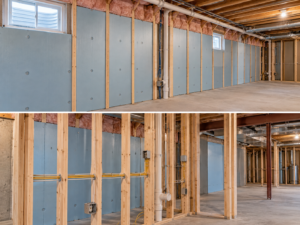
Basement moisture does not always enter through the wall or floor. Warm indoor air reaching a cold rim joist can create condensation at the top of the foundation.
Why This Decision Belongs in Preconstruction
Voorhees and Berlin homes may have exposed rim areas around joist ends, hose bibs, vents, ducts, and service penetrations where air leakage and temperature differences are concentrated.
What Local Properties Change
Look high as well as low for staining. Determine whether moisture comes from condensation, exterior water, plumbing, or another source before the rim area is insulated and concealed.
What to Verify Before Work Starts
Air sealing limits humid indoor air reaching cold surfaces, while insulation helps control surface temperature. The assembly should suit the existing construction and coordinate with fire blocking, ducts, and wall insulation.
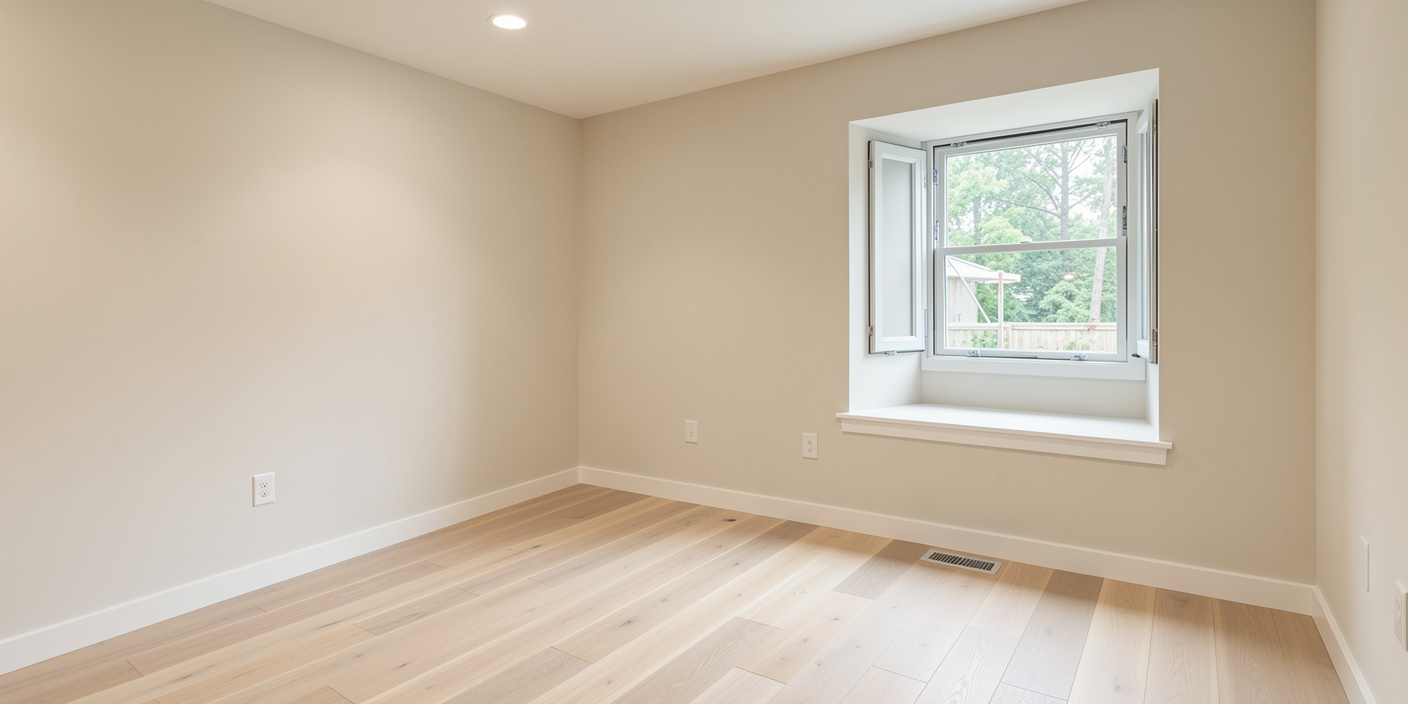
How the Finished Work Should Perform
Wood and adjacent materials should be dry and in suitable condition before drywall closes the area. Do not trap an unresolved moisture path behind new finishes.
Frequently Asked Questions
Does condensation mean the foundation is leaking?
Not always. Condensation can form on cold framing or masonry even without exterior water entry.
Should a damp rim joist be insulated?
The moisture source and material condition should be addressed before the area is enclosed.
Will a dehumidifier solve the issue?
Humidity control can help, but air leakage, surface temperature, and other moisture sources may also need correction.
Plan the Next Step
Subterra can evaluate basement finishing conditions from the perimeter inward so insulation and drywall are installed only after the moisture strategy is clear.
Helpful source: U.S. EPA – Mold and Moisture