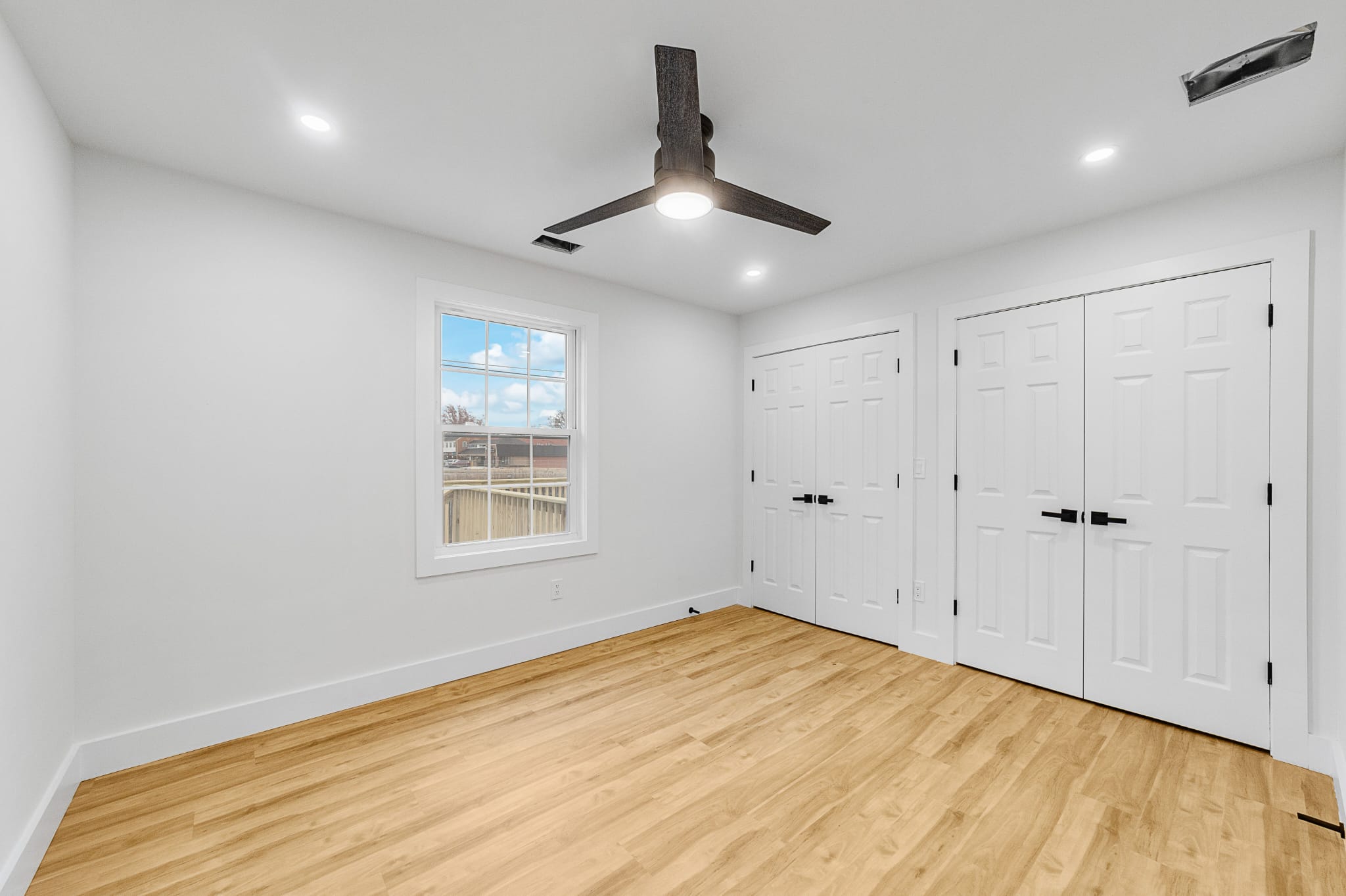
A sump pump may be one of the least attractive components in a basement, but burying it behind built-ins or permanent flooring can make routine service destructive.
Design From Function Backward
Voorhees and Marlton basements often combine family rooms, offices, gyms, or guest spaces with the same lower-level drainage and mechanical systems.
What Is Different About These Local Homes
Locate the sump before drawing built-ins. Preserve access to the lid, pump, check valve, discharge union, electrical connection, alarm, and any backup equipment.
Resolve These Details Before Ordering Materials
Use removable panels, utility doors, or a small service zone to control appearance and sound without sealing the system away. Finished flooring should stop so the lid can still be removed.
The Takeaway for Homeowners
The best basement makes infrastructure less visible while keeping maintenance straightforward. Serviceability should be treated as a design requirement.
Frequently Asked Questions
Can a sump pump be enclosed in a cabinet?
Potentially, if the design preserves the required access, clearance, safety, and serviceability.
Should the sump pit be covered?
Covered systems are common, but the lid and installation should fit the equipment while maintaining access.
Can finished flooring go over the sump lid?
Permanent flooring should not prevent the lid from being removed for inspection or pump replacement.
Plan the Next Step
Subterra Basement Remodelers can integrate sump pumps, utilities, storage, flooring, and room layouts so the finished basement remains practical to maintain.
Helpful source: New Jersey DCA – Current Construction Codes